Finding the right textile manufacturers in Los Angeles takes more than comparing prices. Delayed fabric deliveries, inconsistent quality, limited material options and unclear communication can slow down everything from sampling to final garment production.
Los Angeles has a large network of designers, apparel brands and cut-and-sew facilities, so the fabric manufacturers in Los Angeles that brands can choose from range from local mills to suppliers that ship in from Canada and overseas. This guide explains what to look for in a textile manufacturing partner, how local and Canadian sourcing compare, and how Fine Cotton Factory supports Los Angeles brands with custom and ready-to-ship knitted fabrics from Toronto.
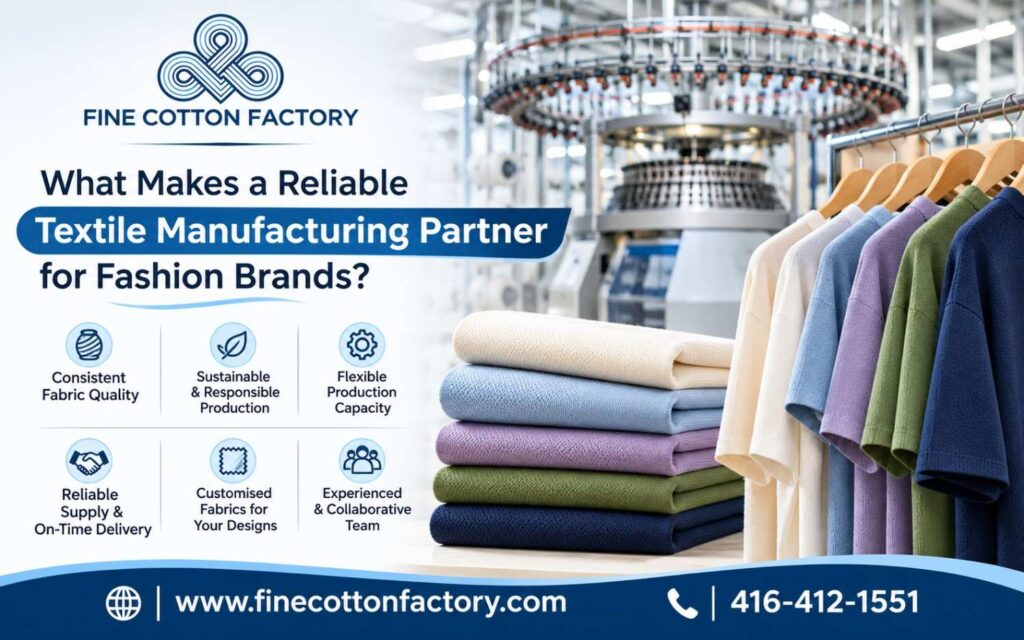
A reliable textile manufacturing partner should understand your product requirements, maintain consistent production standards, offer technical support, and adapt as your business grows.
Whether you’re developing everyday apparel, activewear, premium basics, or specialized knitted fabrics, the right manufacturing relationship can make a noticeable difference to your product quality and long-term production efficiency.
The best textile manufacturer for a Los Angeles fashion brand is one that matches your fabric type, offers sampling and custom development, keeps GSM and colour consistent across batches, gives clear lead times, and can deliver to Los Angeles reliably, whether it is based in California or ships from Canada.
What Los Angeles Fashion Brands Need From a Textile Manufacturer
A textile manufacturing partner should contribute more than fabric rolls.
Fashion brands need a manufacturer who understands how materials behave, how fabrics perform during garment construction, and how production requirements change as a collection develops.
For example, a brand developing an activewear collection may need stretch recovery, moisture management, durability, and a comfortable hand feel.
A fashion label producing premium everyday clothing may prioritize softness, drape, breathability, and colour consistency.
These requirements call for different material knowledge and manufacturing capabilities. A reliable partner understands these differences instead of offering the same standard fabric solutions for every project.
1. Consistent Fabric Quality Across Every Production Batch
Fabric consistency is one of the most important factors when selecting a textile manufacturer. A fabric sample may look and feel perfect, but the real test is whether the manufacturer can reproduce those characteristics throughout bulk production.
Even small variations in fabric weight, colour, stretch, texture, or finishing can affect the final garment.
What should fashion brands evaluate?
– GSM consistency: Does the fabric maintain the required weight across production batches?
– Colour matching: Can the manufacturer maintain consistent shades during repeat orders?
– Dimensional stability: Does the fabric retain its measurements after washing?
– Surface quality: Are there noticeable differences in texture, knitting structure, or appearance?
– Performance testing: Can the manufacturer evaluate shrinkage, pilling, stretch recovery, and durability where required?
A dependable manufacturer follows defined quality-control procedures rather than relying only on visual inspection. This helps fashion brands reduce production surprises and maintain consistent product standards.
2. Custom Fabric Development for Los Angeles Fashion and Activewear Brands
Not every fashion product can be made using an off-the-shelf fabric. Some collections require specific fabric weights, knitting structures, stretch properties, textures, or fibre combinations to achieve the intended design and performance.
A technically capable manufacturing partner can help brands develop materials around these requirements.
This becomes particularly valuable when working with:
– Custom jersey and cotton fabrics
– Rib-knit and interlock fabrics
– Jacquard knitted structures
– Stretch and performance textiles
– Recycled and sustainable fibre blends
– Specialized fabrics for activewear and lifestyle products
Why does technical expertise matter?
Because a fabric must work beyond its appearance. Its construction, fibre composition, finishing, and physical properties all influence how it performs during cutting, stitching, washing, and everyday use.
Need a fabric that doesn’t exist yet? Talk to our development team about GSM, fibre and finish.
Request a Quote
3. Production Capacity That Supports Business Growth
A manufacturer with in-house research and development capabilities can help evaluate material options, refine specifications, and develop prototypes before moving towards larger production quantities.
A manufacturing partner should be able to support your current requirements while leaving room for future growth.
A supplier who handles small development orders but struggles with repeat production may create challenges when a fashion brand expands its collections.
Before making a decision, understand the manufacturer’s production capabilities.
| Production factor | What brands should look for |
| Sampling | Ability to develop and evaluate fabric samples |
| Small-batch production | Flexibility for product testing and limited collections |
| Bulk manufacturing | Capacity to support larger production requirements |
| Repeat orders | Consistency in specifications and quality |
| Customisation | Ability to adjust fabric construction and properties |
| Lead times | Realistic and clearly communicated production schedules |
Production flexibility is particularly useful for emerging fashion labels, established apparel businesses, and brands introducing new product categories.
The objective is not simply to find the biggest manufacturer. It is to find one whose production capabilities match your business model.
4. Material Sourcing and Sustainable Manufacturing Practices
Sustainability is becoming an important consideration in fashion product development. Brands are paying closer attention to fibre selection, material sourcing, manufacturing processes, and the environmental impact of their products.
A reliable textile manufacturer should be able to discuss material choices and explain the practical differences between conventional, recycled, and alternative fibres.
Some important areas to explore include:
- Responsible fibre selection: Availability of organic cotton, recycled polyester, and other alternative fibres.
- Material traceability: Clear information about fibre composition and sourcing.
- Waste reduction: Manufacturing practices that help minimize material waste.
- Resource efficiency: Consideration of water, energy, and chemical use during production.
- Material certifications: Relevant third-party certifications and documentation where applicable.
Sustainable fabric development should also consider durability and product lifespan. A material that maintains its quality through regular use and washing can support more responsible product development.
5. Clear Communication and Reliable Delivery to Los Angeles
Even a technically capable manufacturer can become difficult to work with if communication is inconsistent.
Fashion production involves several connected stages, and delays or unclear specifications at one stage can affect the entire collection timeline.
A dependable manufacturing partner keeps communication practical and transparent.
Look for a manufacturer who:
- Provides clear quotations and production timelines.
- Communicates material availability and potential limitations.
- Shares sampling and development updates.
- Explains technical issues instead of leaving them unresolved.
- Provides realistic updates when production schedules change.
- Maintains clear documentation of fabric specifications.
This is particularly important for fashion brands working with seasonal collections, product launches, and repeat manufacturing orders.
A good partnership should make production easier to manage, not introduce another layer of uncertainty.
6. Local vs Canadian Textile Manufacturers: Which Fits Your Los Angeles Brand?
Los Angeles has a diverse fashion and apparel manufacturing ecosystem, serving everything from independent designers and emerging labels to established fashion businesses.
This creates demand for manufacturers who can accommodate different product categories, material specifications, and production requirements.
For brands researching fabric manufacturers in Los Angeles, it is worth looking beyond a manufacturer’s location and understanding what its manufacturing capabilities actually include.
Brands searching for textile manufacturers in Los Angeles often start with local mills and converters, which can mean shorter shipping distances and easier in-person visits. Others work with Canadian or overseas manufacturers when they need a specific knit construction, larger inventory or custom development. The right choice depends on your fabric requirements, order size and timeline, not location alone.
Consider these factors when evaluating potential suppliers:
| Factor | Local Los Angeles supplier | Canadian manufacturer (Fine Cotton Factory) |
| Shipping distance | Shorter, often same-region delivery | Cross-border shipment from Toronto: [add typical transit time to LA] |
| Fabric range | Varies by mill or converter | Circular-knit cotton, jersey, rib, interlock, jacquard, performance and eco-engineered fabrics |
| Stock availability | Varies | Large ready-to-ship inventory plus custom development |
| Sampling | Often quick, in-person | Swatches and development samples shipped to LA: [add typical sampling time] |
| Customs and duty | Not applicable | Documentation needed; confirm HS code and USMCA eligibility with your customs broker |
Brands should also consider whether a local supplier, domestic manufacturing partner, or international textile manufacturer offers the right combination of technical expertise, communication, production capacity, and logistics.
The best choice depends on the actual requirements of the collection rather than location alone.
How Fine Cotton Factory Supplies Los Angeles Brands
Fine Cotton Factory is based in Toronto, Canada, and supplies knitted fabrics to fashion and apparel brands in Los Angeles and across North America. Los Angeles brands can request swatches, develop custom fabrics and order from our ready-to-ship inventory, with shipments arranged to your facility or cut-and-sew partner in Southern California.
Building a Los Angeles collection? Request swatches and sample cards.
7. Quality Testing and Manufacturing Transparency
Fabric quality should be supported by measurable specifications wherever possible.
A manufacturer should be able to explain how its materials are evaluated and which tests are relevant to the intended application.
Depending on the fabric and its intended use, brands may want to discuss:
- Fabric weight and composition testing.
- Colourfastness to washing and rubbing.
- Shrinkage and dimensional stability.
- Pilling and abrasion resistance.
- Moisture management and absorbency.
- Stretch and recovery performance.
Working with a manufacturer that understands material specifications and documentation can help brands make better-informed production decisions.
8. A Long-Term Partnership Rather Than a One-Time Transaction
The relationship between a fashion brand and a textile manufacturer often becomes more valuable over time. As a manufacturer understands your preferred fabric constructions, quality expectations, and product requirements, future development can become more efficient.
A long-term partner can help with:
- Refining existing fabric specifications.
- Developing materials for upcoming collections.
- Improving fabric performance and construction.
- Exploring new fibre combinations.
- Maintaining consistency across repeat orders.
- Adapting material solutions as product requirements evolve.
This kind of collaboration is especially valuable for brands that want to build a recognizable material identity rather than repeatedly sourcing different fabrics for every collection.
How to Evaluate Textile Manufacturers in Los Angeles: A Practical Checklist
Before committing to a manufacturing relationship, take time to evaluate the supplier beyond its product catalogue.
Here is a practical checklist fashion businesses can use:
| Evaluation point | What to confirm |
| Manufacturing experience | Experience with your required fabric category |
| Product range | Availability of relevant fabric constructions |
| Custom development | Ability to work with specific technical requirements |
| Quality control | Defined inspection and testing procedures |
| Production capacity | Ability to meet your order requirements |
| Sampling | Availability of development samples |
| Sustainability | Fibre sourcing and relevant documentation |
| Communication | Clear points of contact and production updates |
| Long-term support | Ability to accommodate future product development |
One useful approach: Share a detailed fabric brief before requesting a quotation. Include fibre composition, target GSM, fabric width, construction, colour requirements, intended application, estimated quantity, and expected delivery timeline.
The more clearly your requirements are defined, the easier it becomes to assess whether a manufacturer is genuinely equipped to handle your project.
Frequently Asked Questions About Textile Manufacturers in Los Angeles
1. What should fashion brands look for in a textile manufacturing partner?
Fashion brands should evaluate manufacturing experience, fabric quality, technical expertise, production capacity, custom development capabilities, quality-control procedures, and communication. The right partner should understand both the material requirements and the commercial needs of the brand.
2. How do I choose between different fabric manufacturers in Los Angeles?
Compare manufacturers based on their fabric specialization, available knitting or weaving capabilities, quality standards, sampling support, production flexibility, and delivery commitments. Request samples and discuss your technical requirements before making a decision.
3. Why is custom fabric development important for fashion brands?
Custom fabric development allows brands to create materials with specific weights, textures, fibre blends, colours, and performance properties. It also helps businesses develop distinctive products that are not limited to standard fabric collections.
4. What fabric testing should a fashion brand request?
Depending on the application, relevant tests may include GSM verification, colourfastness, shrinkage, pilling, abrasion resistance, stretch recovery, and moisture management. Testing requirements should reflect the intended use and performance expectations of the final product.
5. Can textile manufacturers support small fashion brands?
Yes. Some manufacturers offer sampling, prototyping, and smaller production runs, although minimum order quantities vary. Brands should discuss sampling costs, development timelines, and minimum production requirements before beginning a project.
6. What is the difference between a fabric supplier and a textile manufacturing partner?
A fabric supplier primarily provides existing materials, whereas a textile manufacturing partner may also contribute to fabric development, material engineering, production planning, technical evaluation, and ongoing product improvements.
7. Why should fashion brands consider sustainable fabric manufacturing?
Sustainable fabric manufacturing helps brands make more informed material choices, explore recycled and alternative fibres, reduce unnecessary waste, and develop products with greater consideration for their environmental impact.
8. What is the difference between a textile manufacturer and a fabric manufacturer in Los Angeles?
A textile manufacturer produces a broad range of materials, including fabrics, yarns and technical textiles, while a fabric manufacturer focuses on producing the fabrics used in apparel, home and industrial products. Many suppliers serving Los Angeles brands offer both, so it is more useful to ask which fabric constructions and finishing services they can actually provide.
9. Who are the best textile manufacturers in Los Angeles?
There is no single best option. The right textile manufacturer depends on your fabric type, order size, sampling needs and timeline. Los Angeles brands can work with local mills and converters, or with North American manufacturers such as Fine Cotton Factory in Toronto. Compare sampling support, quality control, lead times and communication before choosing.
10. Does Fine Cotton Factory supply fabric to Los Angeles brands?
Yes. Fine Cotton Factory is based in Toronto, Canada, and supplies wholesale and custom-developed knitted fabric to fashion and apparel brands in Los Angeles, alongside clients across Canada and in New York
11. Which fabrics do Los Angeles fashion brands source from Fine Cotton Factory?
Our range includes cotton and jersey fabrics, rib and interlock knits, jacquard structures, performance textiles, and eco-engineered fabrics made with recycled and plant-based fibres. We can also develop custom fabrics around your GSM, fibre and finish requirements.
Fine Cotton Factory: Textile Manufacturer Supplying Los Angeles Brands
Choosing a textile manufacturing partner is ultimately about finding a team that understands what your products need and has the technical capabilities to bring those requirements to life.
At Fine Cotton Factory, we bring more than 25 years of textile manufacturing experience, having been established in Canada in 1998. We specialize in premium circular-knit fabrics, combining advanced knitting technology, in-house research and development, and custom textile engineering to support businesses across different industries.
Our capabilities include cotton and jersey fabrics, jacquard knits, performance textiles, sustainable fabric solutions, and custom fabric development.
We work with businesses looking for more than standard material sourcing, helping turn specific fabric requirements into practical manufacturing solutions.
Looking for textile manufacturers in Los Angeles who can support custom development and repeat production? Fine Cotton Factory has been manufacturing premium knitted fabrics since 1998 and supplies fashion and apparel brands in Los Angeles from our Toronto facility. Send us your fabric brief, including fibre, GSM, width, quantity and timeline, and our team will come back with sampling options and a quote.
Let’s build fabric solutions that bring together quality, functionality, innovation, and long-term value.
Start Your Fabric Project With Fine Cotton Factory
Share your fibre, GSM, width, quantity and timeline.
Request a QuoteCall 416-412-1551 or email info@finecottonfactory.com.
Mon to Fri, 9:00 AM to 5:00 PM Eastern (6:00 AM to 2:00 PM Pacific).